 Call 1800 854 453


News
Explore our latest newsletters, inspiring customer stories, volunteer profiles, and heartwarming community highlights. Discover the real moments, real people, and real impact behind our mission to support independence and connection across South Australia.
Henry: Still Testing Himself
Photograph: Sia Duff/The Guardian
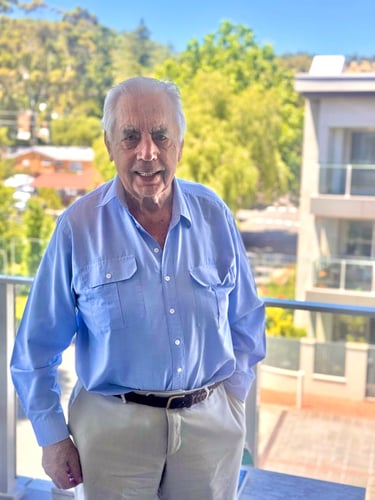
Meeting Henry, it’s quickly clear that age is but a number. At 102, he is not what you expect - a tall, fit man fuelled by iced coffee (Farmers Union, of course) and great ideas. Each morning, Henry starts with an indoor rowing session, the machine sitting proudly in his living room, perfectly positioned to take in the views of the Adelaide Hills.
Henry has the energy of someone who has never stopped learning. He’s like a Swiss army knife - A Father. A Husband. A Farmer. A Veteran. An Innovator. A Sportsman. A Friend. A man who still watches YouTube to refine ideas that are quietly brewing. A student for life.
Born in Glenelg on 26 September 1923, Henry’s life has never stayed still for long. At ten years old, he moved to New Zealand due to his father’s work. This is where he joined the armed forces, which would later take him across countries and continents - New Zealand, the United States, Australia and England.
During the Second World War, Henry served across all three branches - the Army, Air Force and Navy of New Zealand. New Zealand was the only Commonwealth country who supplied pilots to the Royal Navy. In England the Royal Navy then selected Henry for his fighter training in the United States as an aircraft carrier pilot.
Growing up in New Zealand, rugby was in his blood. Henry went on to captain the Fleet Air Arm rugby team. There was just one position available, and it had his name on it. He famously scored the winning try in a post-war rugby championship.
After the War, Henry returned to New Zealand and elected to be a farmer “I wanted to be able to paddle my own canoe” and while waiting for a training course he decided instead to work on farms gaining experience in farming. He did a summer season being paid to shoot feral deer and goats for the New Zealand Government.
The next venture was when a couple of Henry’s ex-Navy friends told him Australia was starting a Fleet Air Arm with the Royal Navy supplying the air crew for the first two years while Australia trained up ex Air Force pilots to Navy standard. “We are fully trained. We should go over. They would love us!”. So he and his ex-Navy mates were transported by passenger ship to England. It was on that ship that he first met Madge.
It was in England, after the war, when he was serving with the Australian Navy that Henry was on convalescent leave in London - after crashing his plane in Ireland (due to a fuel gauge error) - he fortuitously bumped into Madge - or “Madgie,” as he affectionately called her. His eyes sparkled as he retold the story of the day he saw her in Piccadilly Square, London.
The rest was history, as they say, and they started their life together, after Henry returned to Australia with the Australian Navy and Madge returned separately. Henry put it to Madge that she could have him as a pilot or a farmer - she chose farmer.
The opportunity of following on from his family, and a generous £500 gift from his uncle, steered him into farming and land development in Keith, South Australia. He became involved with the Australian Land Development Scheme, where farmers were financially supported to develop land into a usable condition as long as it would be good for Australia. You had to be first refused accommodation from your Trading Bank. Each time, “I qualified”.
It was here that one of Henry’s most innovative contributions took shape: the invention of The Gun Crutcha - a sheep-handling cradle. The cradle redefined the way sheep could be crutched and treated, reducing stress on both animal and handler. “Jackaroos were some of the hardest workers on the farm back then. The sling made the jobs much easier for all involved.” The design proved to be so effective that it became widely sought after by farmers at the time and is still considered standard practice across Australia today. Henry spoke about its debut at the Sheepvention show, cementing his place as not just a farmer, but an innovator - and clearly putting him on the map.
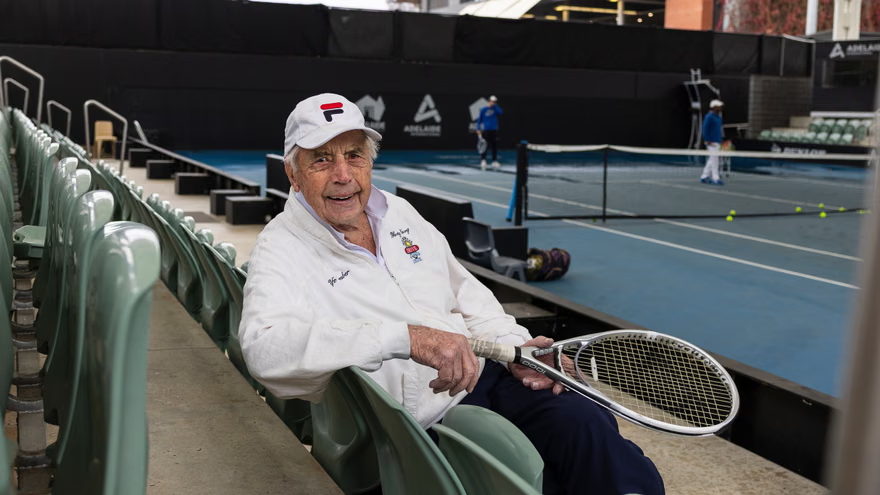
Eventually, Adelaide became home for his family, and with it, another lifelong passion re-emerged - tennis. While Henry has always loved sport, tennis became something deeper: community, connection and competition. He became involved with Memorial Drive and seniors’ tennis clubs, continually competing and forming friendships that cross decades.
Tennis has taken Henry across the world through local, national and international Masters tournaments, as well as the Australian Open. Even now, future plans are firmly on the calendar: Crete later this year, and maybe Japan this year as well. When asked whether any of his children play tennis, his answer was immediate - “Yes, all of them.”
Family is never far from his story. He misses “his Madgie”. They were together for 63 years. Henry is a father of three sons, each successful in their own fields, and a proud grandfather of nine, with eight great-grandchildren following behind. Alongside them is a group of mates who keep him connected - Navy friends, tennis players, and a wide network of community relationships that Henry credits for a long and fulfilling life.
When asked what brings him joy, the answer came quickly. “WINNING - I eat well and I exercise… and I try to get out there and test myself every week. I like to have a ranking that tells me where I’m at.”
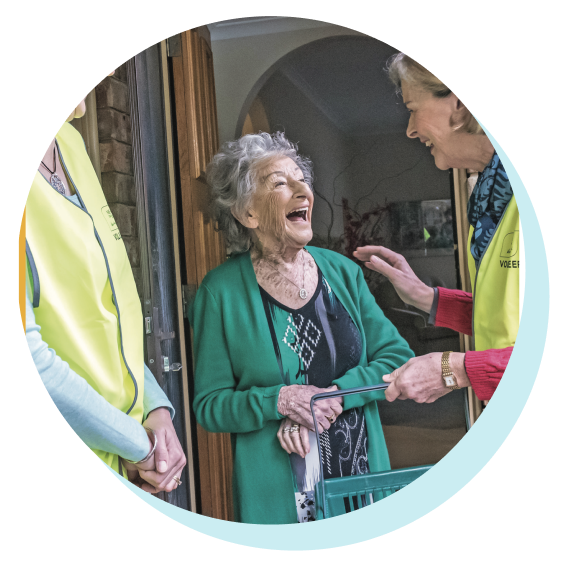
He eats well. He exercises. He keeps his mind sharp. Staying socially connected is important to him, and for the past five years, Meals on Wheels has also been part of that picture. Henry speaks warmly about the service and the role it plays in supporting him to live independently. “The volunteers are lovely - I often see different faces for my delivery.” His favourite meal is the roast lamb, a familiar dish from his farming days.
Henry is content and someone to look up to. “I’m in the top paddock now,” he says. “You know, the one you look after with the best feed. I’m very fortunate to be here. I’ve made it.”
What a way to live.